Is Your Senior Dog Just Getting Older, or Are They in Pain?
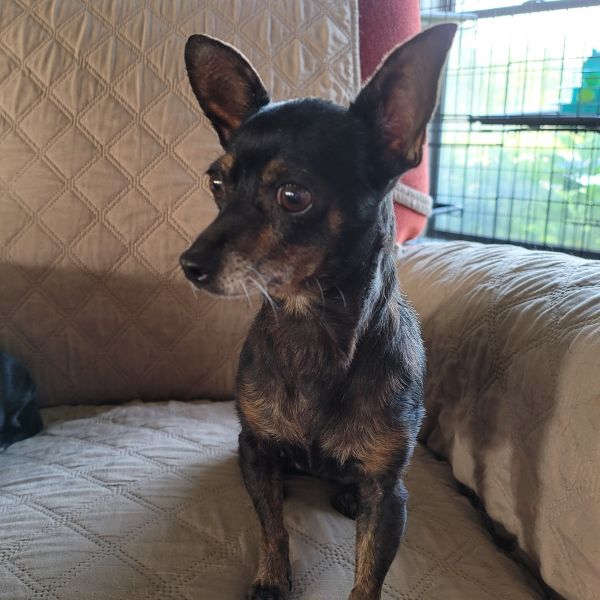
Your dog hesitates before jumping onto the couch. He takes a little longer to stand up after a nap. Maybe she doesn’t race up the stairs anymore, or stops halfway and look at you like they’re reconsidering a cozy night in their bed downstairs instead.
And because they’re 10, 12, or 14 years old, it’s easy to say: “Well, they’re getting old.”
Maybe.
But “old” is not a diagnosis.
That’s an important distinction, because one of the easiest ways to miss a treatable problem in a senior pet is to assume every change is simply part of aging. Yes, older dogs slow down. Their bodies change. Their stamina changes. Their priorities change too. A 13-year-old dog may genuinely prefer a nap to chasing a ball for 45 minutes.
But pain, arthritis, vision problems, neurological changes, and other health issues can also show up as changes in movement or behavior. So when your senior dog starts doing something differently, there are three questions I want you to ask.
Question #1: Is This Actually New?
Before we decide something is wrong, we need to figure out whether anything has actually changed.
--Has your dog always hated slick floors?
--Has he always needed encouragement to jump into the car?
--Has she been taking stairs slowly for the last three years, or did that start this month?
This is why knowing your own pet’s baseline matters so much. You’re not comparing your 12-year-old dog to the Labrador next door or to some chart that says what a “normal senior dog” should be doing. You’re comparing them to themselves.
If your dog has never liked jumping into the back seat, refusing to jump today probably isn’t especially meaningful. But if they’ve launched themselves into that same car every day for eight years and suddenly stop, I’m paying attention.
Something changed.
That doesn’t tell us what the problem is, but it gives us a reason to look closer.
Question #2: Is It Happening More Than Once?
Pets have weird days just like we do. A dog can slip on the floor once. They can sleep too hard and get up looking stiff. They can hesitate on the stairs because something startled them.
One odd moment does not automatically mean there is a medical problem. What matters more is whether you start seeing a pattern.
Maybe your dog struggles to get up every morning or consistently hesitates before jumping onto the couch. Maybe he's slower going downstairs every day but seems fine going up. Or maybe she starts lagging behind halfway through walks that used to be easy.
Once something happens repeatedly, it deserves more attention. You don’t have to obsessively monitor every step your dog takes. Just stop relying entirely on memory. If you notice something that makes you think, “That was weird,” note it, then see if it happens again.
Question #3: Do They Still Want to Do It?
This might be my favorite question because it helps separate preference from physical limitation.
There’s a big difference between:
“My dog doesn’t want to get on the couch anymore.”
and:
“My dog keeps walking over to the couch, looking up at me, trying to jump, and then backing away.”
Those are not the same thing. A senior dog might genuinely decide that sleeping on a rug is more comfortable than climbing onto the bed. That's Fine. But if they clearly want to get onto the bed and their body is preventing them from doing it, that tells you something important.
The same goes for walks. Maybe your older dog has decided a 30-minute walk is ridiculous and 15 minutes is plenty. That can be perfectly reasonable. But if they get excited when you grab the leash, start the walk enthusiastically, and then repeatedly slow down, sit, limp, or struggle to finish the route, I want to know why.
The question is not simply, “Are they doing less?”
It’s, “Are they unable to do something they still want to do?”
That’s a very different problem.
“But They Don’t Cry”
One of the biggest misconceptions about pain in pets is that we expect it to look dramatic, like some whining, yelping, or a visible limp. Sometimes pain looks like that.
But sometimes it looks like a dog who suddenly takes an extra three seconds to stand up. Or one who stops sleeping upstairs. Or one who stands at the bottom of the steps and waits for someone to help.
Those changes can be easy to miss because they happen gradually. You adapt and so does your dog and eventually their new behavior becomes the new normal. That’s why noticing small changes early matters.
Your Phone Is One of Your Best Veterinary Tools
Here’s another thing I wish more pet parents did. Take video.
If your dog is struggling to get up after sleeping, record it. If they hesitate on the stairs every morning, record it. If they walk strangely after playing in the yard, get a short clip.
Because I can almost guarantee what will happen otherwise.
You will take your limping, stiff, clearly uncomfortable senior dog to the veterinarian, and the second you walk through the clinic door, your dog will suddenly decide they are competing in an agility competition. Adrenaline can change how animals move and behave, and your veterinarian may not see the same dog you see at home.
A 20-second video can be incredibly useful for you and for your vet.
Try to get your dog walking toward you and away from you. If the problem involves stairs or getting up from the floor, record that exact behavior too. You’re not trying to diagnose anything. You’re simply gathering information to help your vet make a better diagnosis.
Look at the Environment Too
Not every mobility problem starts inside the dog. Sometimes the environment has changed, or your dog’s ability to navigate it has. That hardwood floor they’ve walked across for 10 years may suddenly feel much less secure when they have weaker rear legs. A high bed that was no big deal at age six can become a serious obstacle at age 13. A steep set of stairs can become difficult because of arthritis, reduced muscle strength, vision changes, or a combination of all three.
Simple changes may help. I'm looking at some options at my house right now because it's almost entirely hardwood, and my 10-year-old bulldog is struggling, especially on the stairs.
-Rugs or runners can provide traction.
-Steps or ramps can reduce jumping.
-A supportive bed can make resting and getting up easier.
You can also move important resources so your dog doesn’t need to climb stairs every time they want water, food, or access to the family.
None of those things replaces figuring out why your dog’s mobility changed. They simply make life easier while you figure it out.
Don’t Let “Old” End the Investigation
I’m not suggesting every slower step means something terrible is happening. Dogs age and their bodies change, so sometimes they're just moving more slowly.
But when something is new, consistent, or interfering with something your dog clearly still wants to do, don’t automatically write it off as age.
Ask questions.
Get those videos.
Make a veterinary appointment if the change keeps happening.
Because the goal isn’t to make an old dog young again. It’s to make sure we aren’t accepting unnecessary discomfort simply because they’ve gotten older.
And if you want another simple framework for figuring out whether a change in your pet deserves more attention, listen to our recent episode : Is Your Pet Acting Differently? 3 Questions to Ask Before You Worry

Host
Amy Castro is the host of The Pet Parent Hotline, a podcast providing practical pet advice for busy pet parents.
A professional speaker and communication expert, Amy is also the founder of Starlight Outreach and Rescue and has spent years working directly with pet owners, veterinary professionals, trainers, behavior experts, and animal rescue organizations. She has personally fostered more than 4,000 animals and has seen firsthand the challenges that can make life with pets feel overwhelming.
Those experiences inspired The Pet Parent Hotline, where Amy tackles the real questions pet parents face, from behavior and health concerns to veterinary decisions, pet care costs, aging pets, and navigating life changes with animals.
Her goal is simple: cut through the noise and give pet parents practical information they can actually use to make better decisions for the animals they love.
No fluff. No guilt. Just help.

Feline Grimace Scale: How to Score Your Cat's Pain at Home