Feline Grimace Scale: How to Score Your Cat's Pain at Home
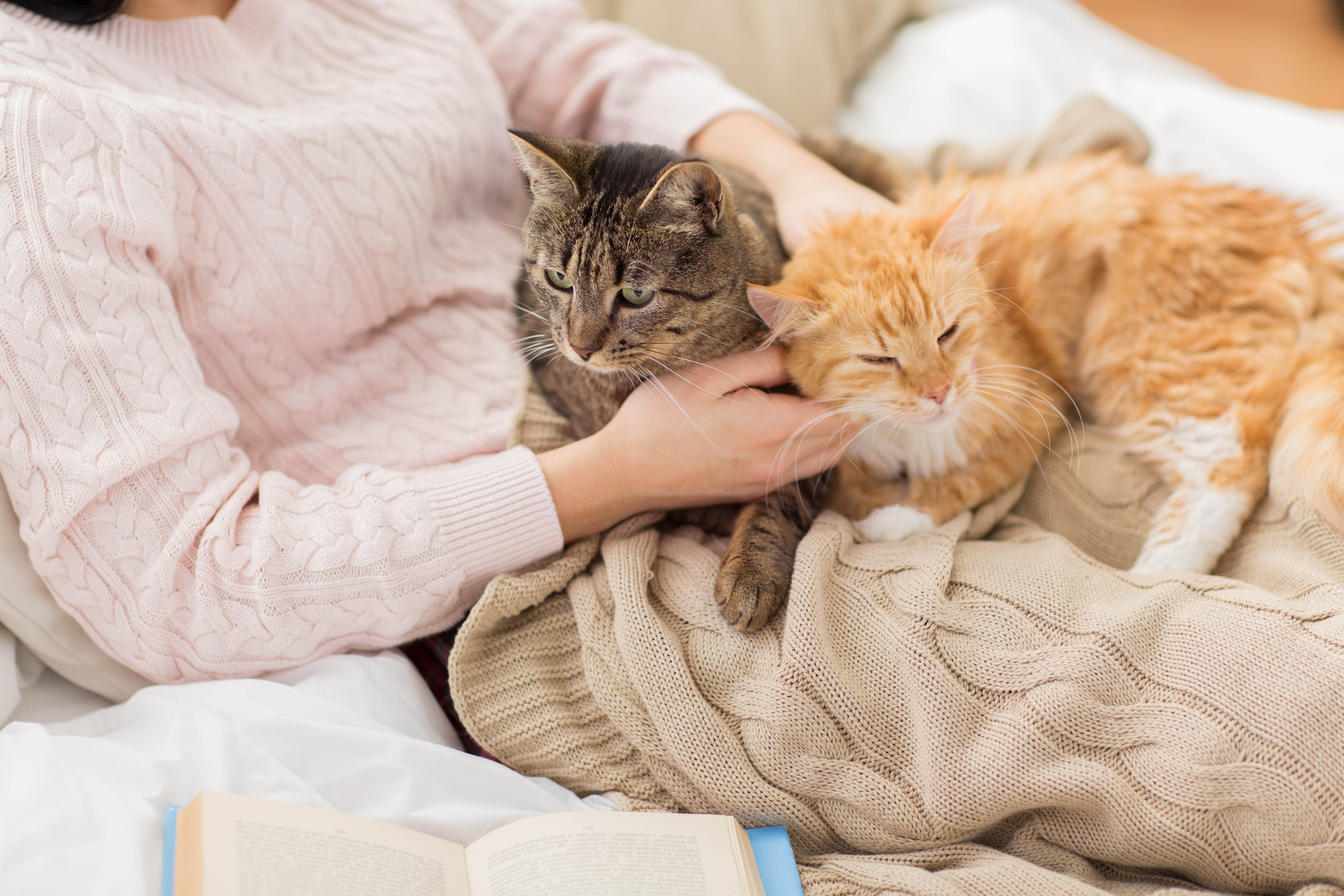
Cats are incredibly good at making us guess.
They can be uncomfortable and still eat. They can be in pain and still walk around the house. They can have something medically wrong and instead of giving us an obvious sign like crying or limping, they just seem a little quieter, a little grumpier, or a little less interested in doing the things they normally do.
That’s one reason pain in cats can be so easy to miss. It’s also why I love tools that give pet parents something more useful than, “Well, he just seems off.”
One of those tools is the Feline Grimace Scale, a science-based method originally developed to help assess acute pain in cats by looking at subtle changes in their facial expressions.
And no, this does not mean you can stare at your cat’s face for 30 seconds and diagnose what’s wrong with them. What it can do is help you become a better observer and give you more specific information to share with your veterinarian.
Why Cat Pain Can Be So Hard to Spot
Cats have a long evolutionary history of being both predator and prey, so advertising weakness has never exactly been a great survival strategy. That instinct didn’t disappear because your cat now sleeps on a heated blanket and screams at you if dinner is four minutes late. Cats may become quieter, sleep somewhere unusual, stop jumping onto a favorite surface, interact differently with other pets, or simply look different before we see anything we would immediately recognize as “pain.”
The problem is that those changes are easy to explain away.
Maybe she’s tired.
Maybe he’s getting older.
Maybe she’s mad about the new cat food.
Maybe he’s just being a cat.
Sometimes those explanations are right. Sometimes they aren’t. That’s where having a more structured way to look at your cat can be helpful.
What Is the Feline Grimace Scale?
The Feline Grimace Scale looks at five areas of a cat’s face and head that can change when a cat is experiencing acute pain.
They are:
-
Ear position
-
Eye tightening
-
Muzzle tension
-
Whisker position
-
Head position
Each feature is scored based on how strongly the pain-associated change appears. You don't need to memorize every scoring detail to benefit from the concept. What matters most for the average pet parent is learning to watch your cat more closely and compare what you see with what is normal for that particular cat.
That last part matters.
You’re not comparing your cat with some imaginary “normal cat.” You’re comparing your cat today with your cat on an ordinary Tuesday when everything seems fine.
1. Look at the Ears
A comfortable cat’s ears are generally upright and relaxed, though they’ll move around depending on what your cat is listening to. With pain, the ears may rotate outward, flatten more, or look tense rather than relaxed.
But context matters. If your cat just heard the vacuum cleaner, this is probably not the ideal moment to assess ear position.
Look at your cat when they’re resting quietly and compare what you see with their normal posture.
2. Pay Attention to the Eyes
One of the more noticeable signs is orbital tightening, or narrowing or squinting of the eyes. A relaxed cat usually has a soft, natural eye shape. A cat experiencing discomfort may hold the eyes partially closed or appear to be squinting.
Of course, cats also squint when they’re sleepy, relaxed, sitting in bright sunlight, or giving you that slow-blink “I tolerate you” expression.
This is why you never want to take one facial feature in isolation and declare that your cat is in pain. You’re looking for a combination of signs and, more importantly, a change from your cat’s normal appearance.
3. Watch the Muzzle
This one can be harder to see at first.
When a cat is relaxed, the muzzle around the nose and mouth tends to look soft and rounded. With pain, that area may look tenser or flatter.
Once you start comparing photos of relaxed cats with cats showing pain-associated facial changes, you may be surprised by how much difference there can be.
It’s subtle, but that’s the point. We’re trying to notice discomfort before it becomes screamingly obvious.
4. Look at the Whiskers
Whiskers are another useful clue.
In a relaxed cat, they usually sit naturally and curve away from the face. When a cat is uncomfortable, the whiskers may appear straighter, more rigid, or positioned differently than usual.
Again, your own cat is the best comparison.
My cat Monkey, for example, has a very different “normal” facial picture than my other cats, Pinny and Pickles, and each of them has their own normal resting expressions too.
Knowing your individual animal matters far more than trying to make every cat fit perfectly into a diagram.
5. Notice the Head Position
A cat in pain may hold the head lower than usual, sometimes around or below shoulder level. You might notice your cat sitting slightly hunched, with the head tucked down instead of comfortably upright.
This becomes even more meaningful if it accompanies other changes such as reduced activity, hiding, loss of appetite, unusual vocalization, litter box changes, or reluctance to jump.
The face is one piece of the puzzle, not the entire puzzle.
Use the Scale to Communicate, Not Diagnose
This is the most important part. The Feline Grimace Scale is not a substitute for veterinary care, and it isn’t a home diagnostic test. Its real value for pet parents is that it helps you move from:
“My cat seems weird.”
to:
“His eyes have been more narrowed than usual, his ears are sitting differently, and he’s holding his head lower when he rests. I’ve noticed it several times over the last two days.”
That is much more useful information.
And if you can get a photo or short video of what you’re seeing at home, even better, because pets have an annoying habit of suddenly looking completely normal the second we walk into the veterinary clinic. Documenting the behavior or facial expression when it’s happening gives your vet information they might never see during a 20-minute appointment.
Some Cats Are Harder to Read
And finally, remember that not every cat’s face fits neatly into a scoring chart. Cats with unusual facial anatomy, including flat-faced breeds, may naturally have features that make some elements harder to interpret. Scottish Folds are another obvious example because their ear position is different by definition.
That doesn’t mean the scale is useless.
It means your cat’s baseline matters even more.
What do their ears normally look like?
How open are their eyes when they’re comfortable?
Where do their whiskers usually sit?
What does their relaxed face look like?
One of the smartest things you can do is take a few clear photos of your cat when you know they’re relaxed and feeling good. Those pictures can give you something to compare against later.
Before You Blame the Behavior, Look for Pain
Here's where all of this becomes especially important. A cat suddenly starts peeing outside the litter box. They bite when you touch them. They stop sleeping on the bed. They become less tolerant of another pet.
It is incredibly easy to label that as a behavior problem. Sometimes it is. But behavior is information.
Before deciding your cat is being difficult, stubborn, spiteful, or “just getting old,” ask whether discomfort could be part of what you’re seeing.
That doesn’t mean every strange behavior is a medical emergency. It means physical discomfort deserves a place on the list of possibilities.
And the earlier you notice something has changed, the sooner you can ask the right questions.
The Feline Grimace Scale gives you one more tool for doing exactly that.
If you want to learn more about recognizing subtle signs of pain in cats, listen to my conversation with Certified Cat Behavior Consultant Amanda Caron on The Pet Parent Hotline.

Host
Amy Castro is the host of The Pet Parent Hotline, a podcast providing practical pet advice for busy pet parents.
A professional speaker and communication expert, Amy is also the founder of Starlight Outreach and Rescue and has spent years working directly with pet owners, veterinary professionals, trainers, behavior experts, and animal rescue organizations. She has personally fostered more than 4,000 animals and has seen firsthand the challenges that can make life with pets feel overwhelming.
Those experiences inspired The Pet Parent Hotline, where Amy tackles the real questions pet parents face, from behavior and health concerns to veterinary decisions, pet care costs, aging pets, and navigating life changes with animals.
Her goal is simple: cut through the noise and give pet parents practical information they can actually use to make better decisions for the animals they love.
No fluff. No guilt. Just help.
Is Your Senior Dog Just Getting Older, or Are They in Pain?