Why Pet Resolutions Fail by Week Two, and the 5-Minute Fix
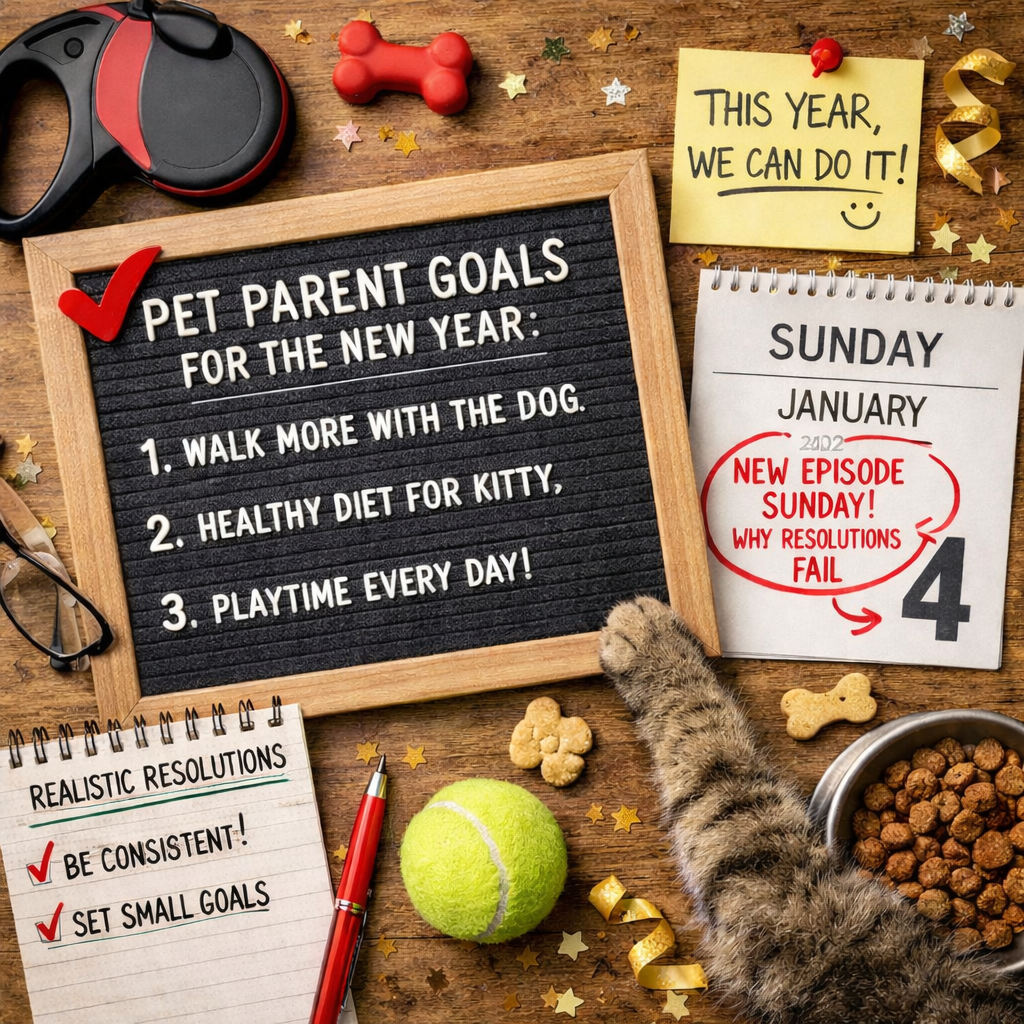
Every January, pet parents start with the best intentions. More walks. Better routines. Less chaos. And then real life shows up like it always does. Your dog is barking while you’re trying to get out the door, you can’t find the leash, you’re already running late, and tonight’s “we’ll definitely do it” turns into “maybe tomorrow.”
That isn’t laziness. It’s what happens when a non-specific goal that lives in your head never turns into a concrete plan you can merge into your day.
There are a lot of reasons pet resolutions fail, but one of the biggest is simple: they’re more wish than plan. They’re vague, they depend on perfect days, and they don’t have a built-in fallback for the messy moments.
Stop Setting Pet Goals for a Fantasy Life
Here’s the shift that makes everything easier. Stop writing goals like you’re a princess in a Disney movie (think: “I’m going to walk my well-behaved dog every day in gorgeous weather with little birds following us and singing to us.”) Your life isn’t going to suddenly be perfect starting on January 1. The weather won’t be perfect. And your dog won’t either.
Most pet goals fall apart because they’re:
Too big to survive a bad day. “Thirty-minute walk every day” has no backup plan.
Too vague to be repeatable. “Play more” doesn’t tell you when, where, or what counts.
Built on motivation instead of a trigger/anchor. Motivation is unreliable. A cue you already do every day is reliable.
If you’ve been blaming yourself, don’t. You don’t need more motivation, you need a smaller plan.
The Minimum Plan Rule
Instead of aiming for the full, ideal version of your habit, create a minimum plan. This is the smallest version of the behavior you will do even on your worst day. If you can’t do the minimum consistently, the minimum is too big.
This is not lowering your standards. It’s building consistency and habit first, because consistency is what creates change with pets. A minimum plan keeps you from negotiating with yourself and quitting the moment you miss a day, or when your too-difficult plan starts becoming something you dread.
What a Minimum Plan Looks Like
For dogs: pick an anchor, something you already do every day, then attach one small action.
Goal: After you finish your first cup of coffee, put the leash on and go outside for seven minutes.
That’s it. Seven minutes counts. If it turns into a longer walk, great. But the minimum is the win, because the minimum is what you can repeat.
For cats: same idea, smaller time window.
Goal: After dinner, do three minutes of interactive play, then give a treat.
Three minutes sounds almost too small, but that’s the point. You’re building a habit that survives your tired days, your busy days, and your “everything is on fire” days.
Why This Works With Pets
Pets don’t need perfection, but they are creatures of habit, and they thrive on predictability. A tiny plan done consistently is better than a big plan you do twice and abandon. Minimum plans also reduce decision fatigue. You stop asking yourself, “Do I have time for the whole thing?” and start asking, “Can I do the minimum?” Most days, the answer is yes.
If you want to level this up later, you can, but only after the minimum is automatic. A simple way to upgrade without breaking the habit is to add an optional bonus. Think of it like a menu:
Minimum: 7 minutes outside
Bonus: 5 more minutes if you’re feeling good
Bonus: a short training game at the end
And remember, you’re still successful even if you only do the minimum. You've done what you committed to do for you and your pet!
Want the Full Reset?
This is part of a bigger conversation about why resolutions fail by week two and how to build pet routines that actually stick when life gets chaotic.
Listen to the episode of The Pet Parent Hotline here: https://www.petparenthotline.com

Host
Amy Castro is a professional speaker, author, trainer and consultant, and columnist for Pet Age Magazine. She's the founder and president of Starlight Outreach and Rescue (www.StarlightOutreachandRescue.org), a Houston, Texas area 501c3 nonprofit animal rescue whose mission is to rescue animals from the community, support shelters in providing medical treatment for at-risk pets, community outreach for pet owners in need, and educating pet parents to help keep pets in homes and off the streets.
Amy started the Starlight Pet Talk Podcast in 2023 as an extension of the rescue's education efforts to be able to reach more pet parents and help them solve their biggest problems so they can live their best lives with the pets they love.
Amy is also a proud USAF veteran and has personally fostered more than 3000 animals during her time in animal rescue.

Beyond the Wag: 7 Questions to Uncover Your Pet's Perfect Vet




