Disappearance vs. Death: Helping Pets Understand Loss in Multi-Pet Households
If you’ve ever lost a pet and then watched your other dog or cat act totally different, you already know how weird and confusing this can be. You’re sad, your routine is wrecked, and meanwhile, your other pet is pacing, clingy, not eating, or acting as if nothing happened. So what is that? Grief? Stress? Routine change? You projecting? All of the above?
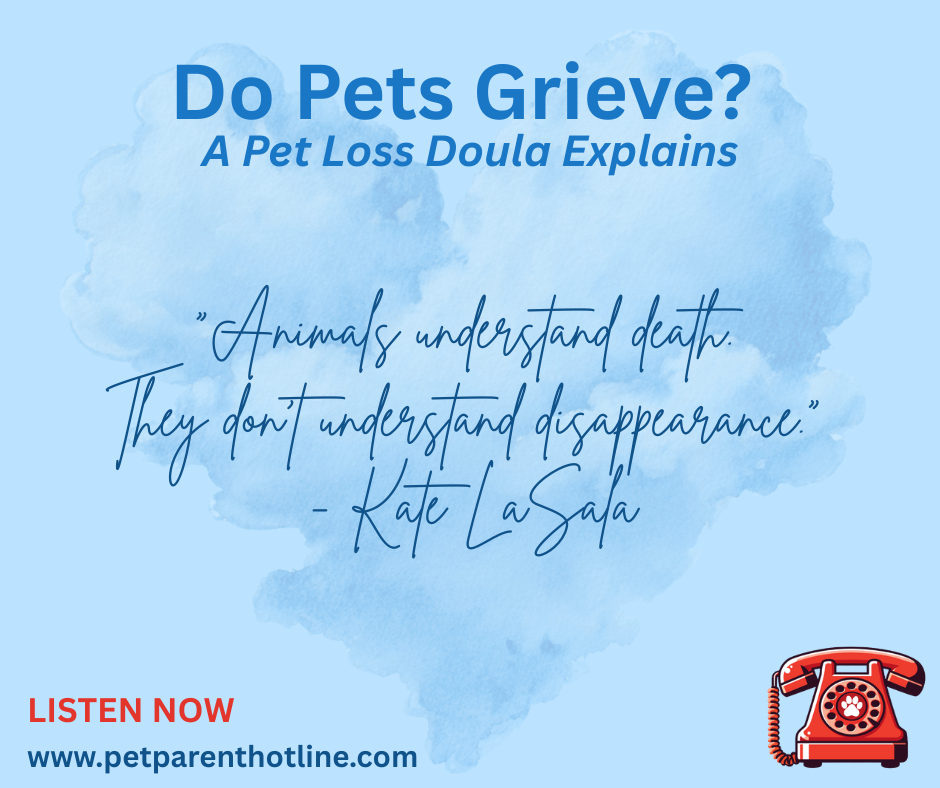
In January, on The Pet Parent Hotline, we talked about this exact thing. If you haven’t listened yet, start here: Do Pets Grieve After a Loss? A Pet Loss Doula Explains. Today, I’m expanding on one of the biggest takeaways from that episode because it changes how you support your pets after a loss, especially if you have a multi-pet home.
Absence vs. Death: What Your Pet Actually Understands
Here’s the idea that flips the whole conversation. Kate LaSalla explained it perfectly in our episode: animals understand absence. They don’t understand disappearance. That sounds small, but it’s huge. Humans can wrap our brains around “gone forever,” even when we hate it. Most pets don’t process loss in an abstract, philosophical way. They experience it in real-time, through their senses and routines.
So when a pet dies, what your surviving pet notices first is the missing stuff:
The missing smell
The missing sounds
The missing body curled up alongside them in their bed
The missing “we always do this together” moments
Dogs live in a world of scent. Cats live in a world of territory and patterns. So if a companion pet is suddenly not there, it creates a giant question mark in their daily life. That’s why you might see them sniffing favorite spots, staring at the door, wandering the house, checking beds, pacing, or vocalizing. And this is why the home can feel so quiet, it almost hurts, not just for you, but for them too. But they’re not sitting around contemplating mortality, they’re reacting to a routine and a relationship that suddenly changed, so we need to interpret what we’re seeing through an animal lens, not a human one.
Common “After Loss” Behavior Changes You Might See
Not every pet reacts the same way. Some barely change. Some totally shift. And it often depends on how bonded they were, not how long they lived together.
A few of the most common things people notice:
- Appetite changes (eating less or sometimes eating more)
- Sleeping more, or being restless and unable to settle
- Clinginess and attention-seeking (following you room to room)
- Withdrawal (hiding, less social, less playful)
- Searching behaviors (pacing, waiting by doors, sniffing specific areas)
- More vocalizing (or suddenly going quiet)
- Irritability or reactivity (shorter fuse than normal)
- Accidents in the house, even if they’ve been solid for years
One thing that’s easy to miss: sometimes the change looks “positive.” If your pets had a weird dynamic, the surviving pet might relax, get bolder, or seem more confident. That doesn’t mean they’re heartless. It means the social structure changed, and they’re adjusting.
Your Emotions Matter More Than You Think
This is the part nobody wants to hear when they’re in the thick of grief, but it’s real. Your pets are reading you. In the episode, Kate shared that our stress hormones, crying, anger, and off-routines all affect them. Dogs can smell cortisol changes. They pick up your tone, your energy, the pacing around the house, the days you’re not getting out of bed.
So sometimes what looks like “they’re grieving” is also “their whole environment changed and their person is not okay.” This doesn’t mean you can’t be sad. It means if your home is emotionally chaotic (totally understandable), your pets may show more anxiety and behavior changes because of it.
When It’s Not Just Grief: Call Your Vet
Grief and stress can absolutely change behavior, but here’s the skeptical, practical truth: not eating, hiding, sudden aggression, or major anxiety can also be medical. So if something feels off, don’t talk yourself out of checking it.
A few good “don’t wait” moments:
- Not eating for more than 24–48 hours (especially cats)
- Rapid weight loss, vomiting, diarrhea, or changes in drinking
- Sudden aggression in a pet who’s never been like that
- Big behavior shifts that don’t start easing after a few days
Better to rule out something medical than assume it’s grief and miss a real issue.
How To Support Your Pet After a Loss
You can’t explain death to your dog. But you can make their world feel safe again. Here’s what helps most, and none of this requires you to be perfect.
Keep routines as steady as possible: Same feeding time, same walk time, same bedtime rhythm. Routine is stability.
Follow their lead: If they’re clingy, let them be clingy. If they want space, give it. Don’t force “comfort” the way humans like comfort.
Give them something to do: Food toys, chews, sniff time, short play sessions. Not because you’re trying to distract them, but because it keeps their nervous system from spiraling.
Lower the pressure: This is not the week to drag them to every new place, host a bunch of visitors, or fix every behavior issue at once.
And here’s the big one from Kate that people don’t talk about enough.
At-home euthanasia, when possible.
Kate said it in a way that really sticks: animals understand death. They don’t understand disappearance. If the pet who is euthanized goes to the vet and doesn’t come back, the other pets can spend days or weeks searching. If it happens at home, they can see what’s happening, choose whether to be near, and smell the body after. It helps their brains file it under “this ended,” not “they vanished.” At home euthanasia is not a fit for every situation or every family, but it’s an important option to know about.
What About Getting Another Pet Right Away?
This is one of those “pause before you act” moments. Kate’s advice was simple: take a beat. Sometimes people rush to get another pet because the silence feels unbearable. That’s human. But it doesn’t always help your remaining pets, and it doesn’t always help you long-term either. A smart middle step if you’re even considering it: foster first. It lets you test how you feel, and it lets your remaining pets show you what they actually need, instead of what you hope will fix the ache.
The Bottom Line
If you take one thing from this, make it this: You don’t have to solve the philosophical question of “do pets grieve” to support your pet well. Watch the behavior. Keep life predictable. Get vet input if anything is concerning. And give both you and your pets time to adjust to a world that feels different now. And if you want the deeper conversation with Kate, listen here: Do Pets Grieve After a Loss? A Pet Loss Doula Explains.

Host
Amy Castro is a professional speaker, author, trainer and consultant, and columnist for Pet Age Magazine. She's the founder and president of Starlight Outreach and Rescue (www.StarlightOutreachandRescue.org), a Houston, Texas area 501c3 nonprofit animal rescue whose mission is to rescue animals from the community, support shelters in providing medical treatment for at-risk pets, community outreach for pet owners in need, and educating pet parents to help keep pets in homes and off the streets.
Amy started the Starlight Pet Talk Podcast in 2023 as an extension of the rescue's education efforts to be able to reach more pet parents and help them solve their biggest problems so they can live their best lives with the pets they love.
Amy is also a proud USAF veteran and has personally fostered more than 3000 animals during her time in animal rescue.

Beyond the Wag: 7 Questions to Uncover Your Pet's Perfect Vet




