Common Pet Cleaning Mistakes That Actually Make Smells Worse
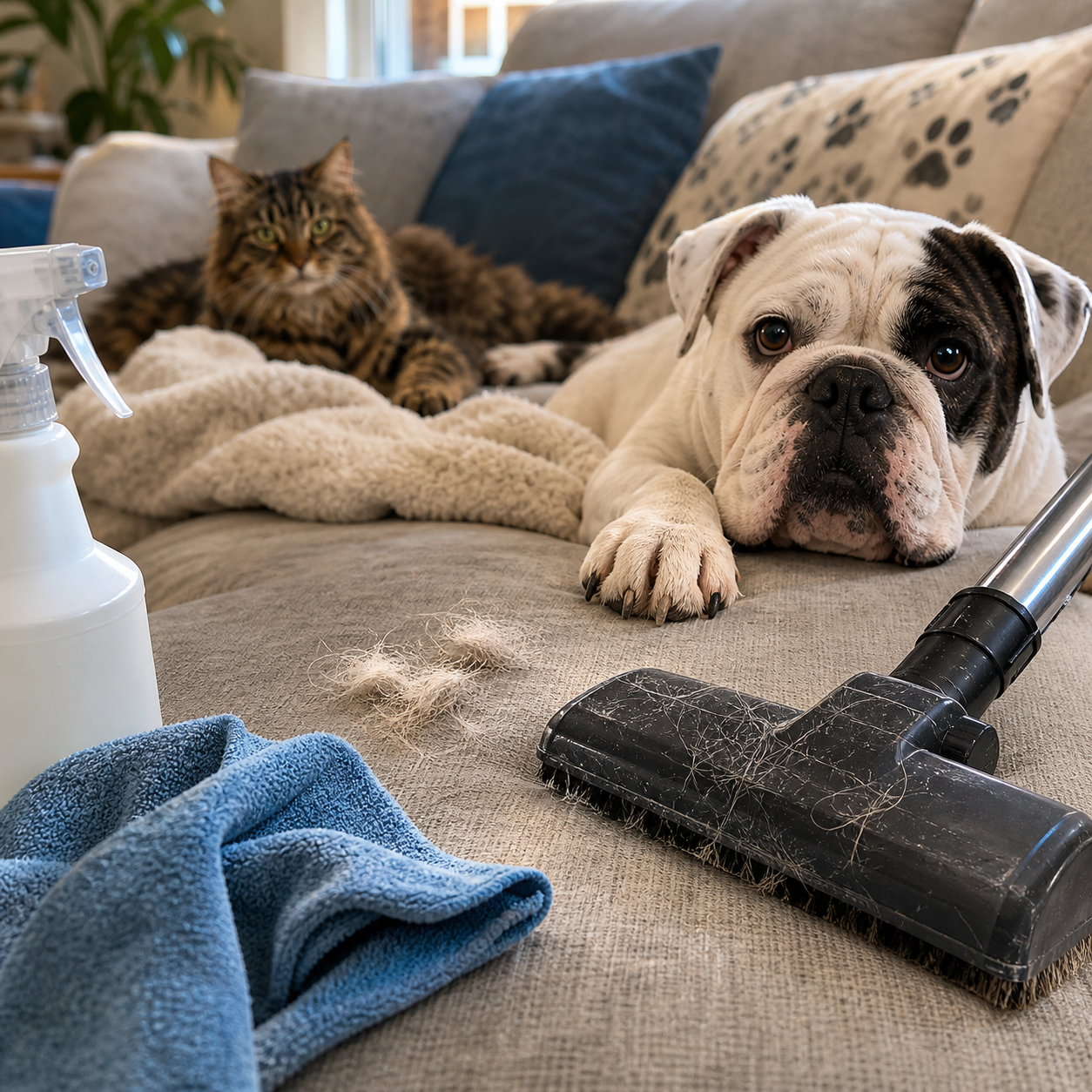
You clean. You vacuum. You mop. You spray something that promises “fresh linen” or “mountain breeze.” And yet somehow, your house still smells like pets. Annoying? Yes.
Unusual? Not at all.
Pet odors are sneaky because they don’t always stay where you expect them to be. They sink into carpet, settle into furniture, hide in their bedding and your's, cling to toys, and sometimes get worse because of the very things we use to try to clean them.
So before you rage-clean your entire house, throw out all your things, or start apologizing to everyone who walks through your front door, let’s talk about a few common cleaning mistakes that might be making the smell worse.
Mistake 1: Grabbing the Strongest Cleaner You Own
I get the instinct. You smell urine, mystery stink, or wet-dog funk and immediately reach for the strongest stuff under the sink. The problem is, strong doesn’t always mean effective. A lot of household cleaners are great for surface dirt, but they don’t actually break down the organic compounds causing pet odors. They just cover them up for a while. Then the fragrance fades, and the smell comes creeping back like it pays rent.
Some cleaners can also make things worse. Ammonia-based products are a big one, especially with urine. Since urine already has an ammonia-like odor, that smell can actually attract pets back to the same spot. And bleach? Please be careful. Bleach and urine are not a friendly combo, and mixing products can create fumes you do not want in your house.
For pet accidents, look for an enzyme cleaner made for pet messes. But don’t just spray and wipe. Most enzyme cleaners need time to sit and work. If you wipe them up too fast, you basically fired them before they got to do the job. Plus, some need to be used before or after another products, so be sure to read the label before using so you're not wasting your time and money.
Mistake 2: Cleaning the Surface and Missing the Source
This is where pet odor gets especially rude. You clean what you can see, but the smell is coming from what you can’t see.
Carpet is the perfect example. A pet accident on carpet may look like one small spot on top, but underneath, it can spread through the fibers, into the padding, and sometimes even down to the subfloor. So when you clean only the top, the surface may look fine, but the odor source is still hanging out underneath, waiting for humidity, heat, or foot traffic to wake it back up.
Same with upholstery. If your dog has a favorite couch cushion or your cat has claimed the chair as her royal property, smell can settle deep into the fabric and padding below.
A quick spray is not always going to cut it. Sometimes you need a real deep clean, extraction, or professional help, especially if the smell has been there a while.
Mistake 3: Using Air Fresheners Instead of Fixing the Problem
I love candles, room sprays, linen sprays, and anything that smells good (as long as it's safe). But if your house smells like “lavender vanilla pee,” we have not solved the problem my friend. We have created a new one.
Air fresheners, plug-ins, candles, and scented sprays can temporarily make a room smell better, but they don’t remove the source of the pet odor. And sometimes, the fragrance layered on top of the pet smell makes the whole thing more noticeable.
If the odor is coming from urine, dander, oils, bedding, litter boxes, crates, or furniture, the goal is not to hide it or overpower it. The goal is to find it and remove it. Then light the candle if you want, but don’t make the candle do the job of a cleaner.
Mistake 4: Forgetting the Stuff Your Pet Actually Uses
Sometimes the house doesn’t smell because the floors are dirty. It smells because your pet’s stuff is dirty. Pet beds, blankets, crate pads, collars (yes, collars), harnesses, toys, and favorite couch spots can all hold odor. And because they’re part of your everyday environment, you may stop noticing them. Until you leave town for a few days, come back, open the front door, and think, “Oh no. Has it smelled like this the whole time?”
Wash pet bedding regularly and in the hottest water possible with odor neutralizing detergents. And a bonus tip? Don't overstuff the washer! With the high efficiency machines we have these days- very little water circulates in the machine, so if you overstuff, some items barely get touched by water, let alone get rinsed clean.
Clean collars and harnesses. Toss toys that cannot be rescued. Check crates, corners, baseboards, and the places your pet sleeps the most. The smell may not be “your whole house.” At my house, it's generally one gross bed, one favorite blanket, or one spot behind a chair where someone in your home has been quietly betraying you.
Mistake 5: Waiting Too Long to Deal With Accidents
Pet messes are much easier to handle when they’re freshly made. Once urine dries, it becomes harder to remove because some odor-causing compounds remain. Moisture can reactivate them later, which is why an old spot may suddenly smell again. That is also why “I cleaned it already” doesn’t always mean it’s gone. It may just mean the visible part is gone.
If you find an accident, blot first. Don’t scrub and push it deeper into the carpet. Then use the right cleaner, give it enough contact time, and make sure the area dries fully. And if your pet keeps going back to the same spot, don’t assume they’re being spiteful. They may still smell something there, even if you can’t, so you might have to repeat the process and work on training too.
A Few Tips That Help
You don’t need to turn your house into a chemical war zone. Start with the basics:
--Wash pet bedding more often than you think you need to and in small loads so they get clean.
--Use enzyme cleaners correctly, especially for urine.
--Clean under furniture and around baseboards.
--Vacuum upholstery, not just floors.
--Open windows when the weather allows and let that fresh air in.
--Groom your pets regularly and appropriately to keep them smelling fresh and their skin in good condition.
--Replace items that are too far gone. --Call in a professional if the odor has moved into carpet padding or furniture.
And if a pet suddenly smells different, is having accidents, has skin issues, or seems off in any way, check with your vet. Sometimes the smell is not a cleaning issue. Sometimes it’s a health clue.
Final Thought
A house with pets doesn't have to smell like pets. But if you’re only spraying, wiping, and hoping for the best, odors may keep coming back because the source was never really gone. Start with the places where smells hide, use products that actually break down the mess, and stop letting “fresh scent” pretend it fixed anything.
For more on why pet odors linger even after cleaning, listen to the episode where I chat with Ed Quinlan, president of Chem-Dry - Why Your House Smells Like Pets (Even After Cleaning). It provides a fantastic foundation for understanding the root causes of these smells and why many of our cleaning efforts don't fix the problem.

Host
Amy Castro is a professional speaker, author, trainer and consultant, and columnist for Pet Age Magazine. She's the founder and president of Starlight Outreach and Rescue (www.StarlightOutreachandRescue.org), a Houston, Texas area 501c3 nonprofit animal rescue whose mission is to rescue animals from the community, support shelters in providing medical treatment for at-risk pets, community outreach for pet owners in need, and educating pet parents to help keep pets in homes and off the streets.
Amy started the Starlight Pet Talk Podcast in 2023 as an extension of the rescue's education efforts to be able to reach more pet parents and help them solve their biggest problems so they can live their best lives with the pets they love.
Amy is also a proud USAF veteran and has personally fostered more than 3000 animals during her time in animal rescue.